← Back/Privacy / Travel

PrivacyWall Travel

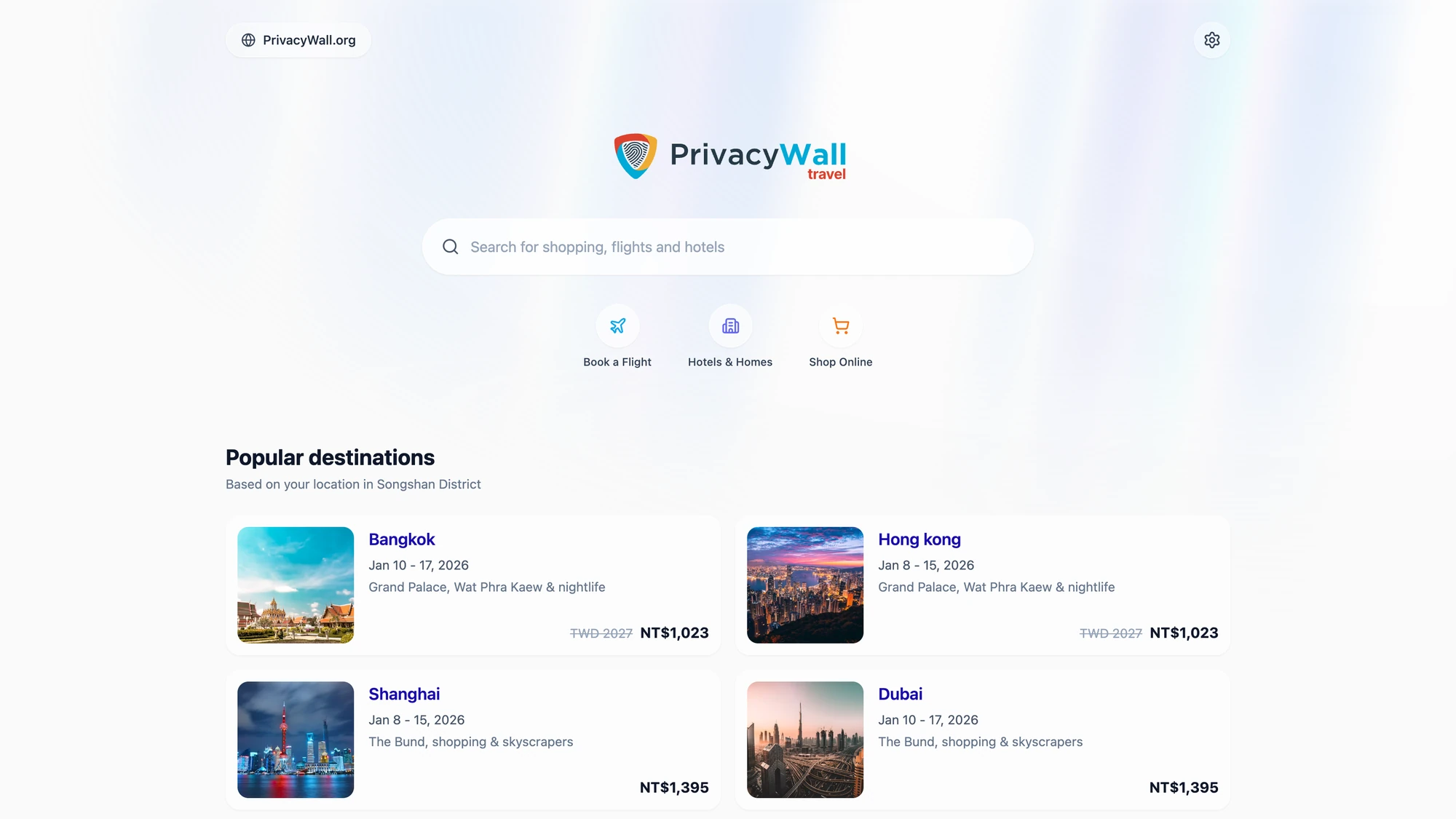
Travel is where privacy-first products usually surrender: the good recommendations in mainstream travel search are paid for with a profile, and a product that refuses to collect one starts the comparison with a handicap. In 2026 I designed PrivacyWall Travel to test how far useful travel context can be built from a coarse location signal and the query alone, intent chosen by the person rather than inferred from their history, and every inference labelled in plain language on the page.

RoleProduct Designer
Year2025-2026
Tags
TravelCommerceReact + TypeScriptPrivacy
PrivacyWall Travel
At a glance

3

Named verticals in place of inferred intent

01The problem

Without a profile, a private search engine could not offer competitive travel results.

The category's recommendation quality is downstream of tracking: history, a device graph, past bookings. A product that refuses to collect them starts with a handicap, and generic results lose to specific ones.

PrivacyWall Travel, the problem

02How we thought about it

Most of what tracking infers, people will declare if asked once.

Instead of asking how to personalise without data, I asked what the user can tell us in one tap. Useful and private stopped being a trade-off and became a design problem with a different solution. Whatever inference remained had to explain itself on the page.

03What we changed

  1. 01

    Replaced inferred intent with named verticals

    One search field sits above three choices: book a flight, hotels and homes, shop online. The user picks the mode in a second, so the product never needs to have been watching them.

  2. 02

    Labelled every inference in plain language

    Popular destinations state the approximate district behind them. A recommendation that explains itself does not need to have been earned by surveillance.

  3. 03

    Led destination cards with dates and price

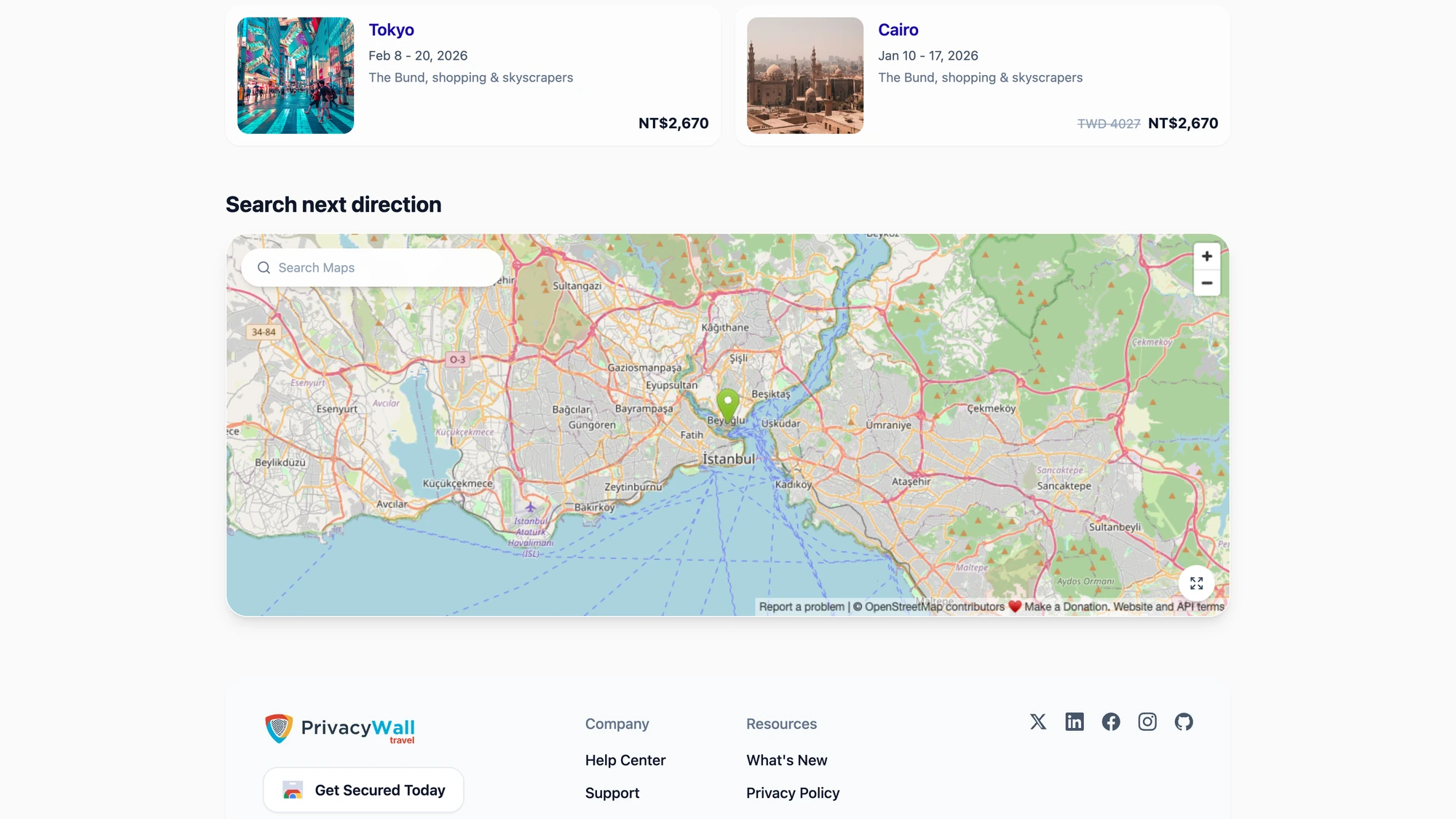
    Each card shows dates, area, the previous price and the current one. The comparison people would run across six tabs happens in a single glance.

The trade-off

I used an approximate district rather than a pinpoint location, so the only location signal stayed coarse and disposable.

04What it did

The recommendations are specific, the prices are comparable, and none of it required a profile. The trip framing, source labelling and price treatment now feed the hotels module inside search.

How we knewEvidence

Reframed the constraint: not how to personalise without data, but what a person can say in one tap.

Benchmark

Qualitative

7

Search engines compared across eight dimensions, written as evidence, interpretation and recommendation with a confidence level.

Confidence: Medium

Benchmark

Qualitative

Mobbin grounding on shipped products, so each recommendation arrives with precedent attached.

Code review

Quantitative

The working prototype inspected line by line.

Confidence: High

Prototype

Qualitative

Built as a working prototype so hierarchy and transitions are judged by using them.

Usability test

Mixed

The PrivacyWall work was tested with users and its tasks passed. Participant details are not published on this page. The benchmark above is desk research.

DecisionsAnd why

What we saw, what we knew, what we chose, and what we gave up.

01

Declared intent over inferred intent

What we saw
Without history or a device graph, a private engine starts travel search with a handicap.
Evidence
Design judgement· QualitativeMost of what tracking infers, people will declare if asked once.
Benchmark· QualitativeMobbin grounding on travel search, destination cards and price comparison.
So we
Three named verticals and an approximate district stated in plain words.
Not
Inferring intent from behaviour.
What happened
The trip framing and price treatment became the specification for the hotels module inside search.

User testingWhat was and was not tested

Benchmarked, prototyped and tested with users. The tasks below were run against pass bars written first, and every task passed. Participant details are not published on this page.

“Plan a flight to Tokyo for December. Tell me where these suggestions came from.”

Can explain the approximate-district label

4 of 5 explain it correctly

Passed

“Which destination is cheapest for your dates?”

Reads dates and total price from the card

5 of 5 correct in 10 seconds

Passed

Every task met its pass bar. Participant details and timings are not published on this page.

My role

Product Designer

What I personally owned on this project.

  • 01Designed the declared-intent model that replaces behavioural inference
  • 02Designed the destination card system, dates, area, price comparison, photography
  • 03Set the labelling rule for every inference shown on the page
  • 04Implemented the surface in React and TypeScript on the shared PrivacyWall token layer
  • 05Fed the resulting trip framing and price treatment back into the search product's hotels module
Made with
ReactTypeScriptTailwindDesign tokensMobbin grounding
Next Project

Cold Electric

© 2026 Alhasan HosniDesigned & Built with precision