← Back/Privacy / Maps

PrivacyWall Maps

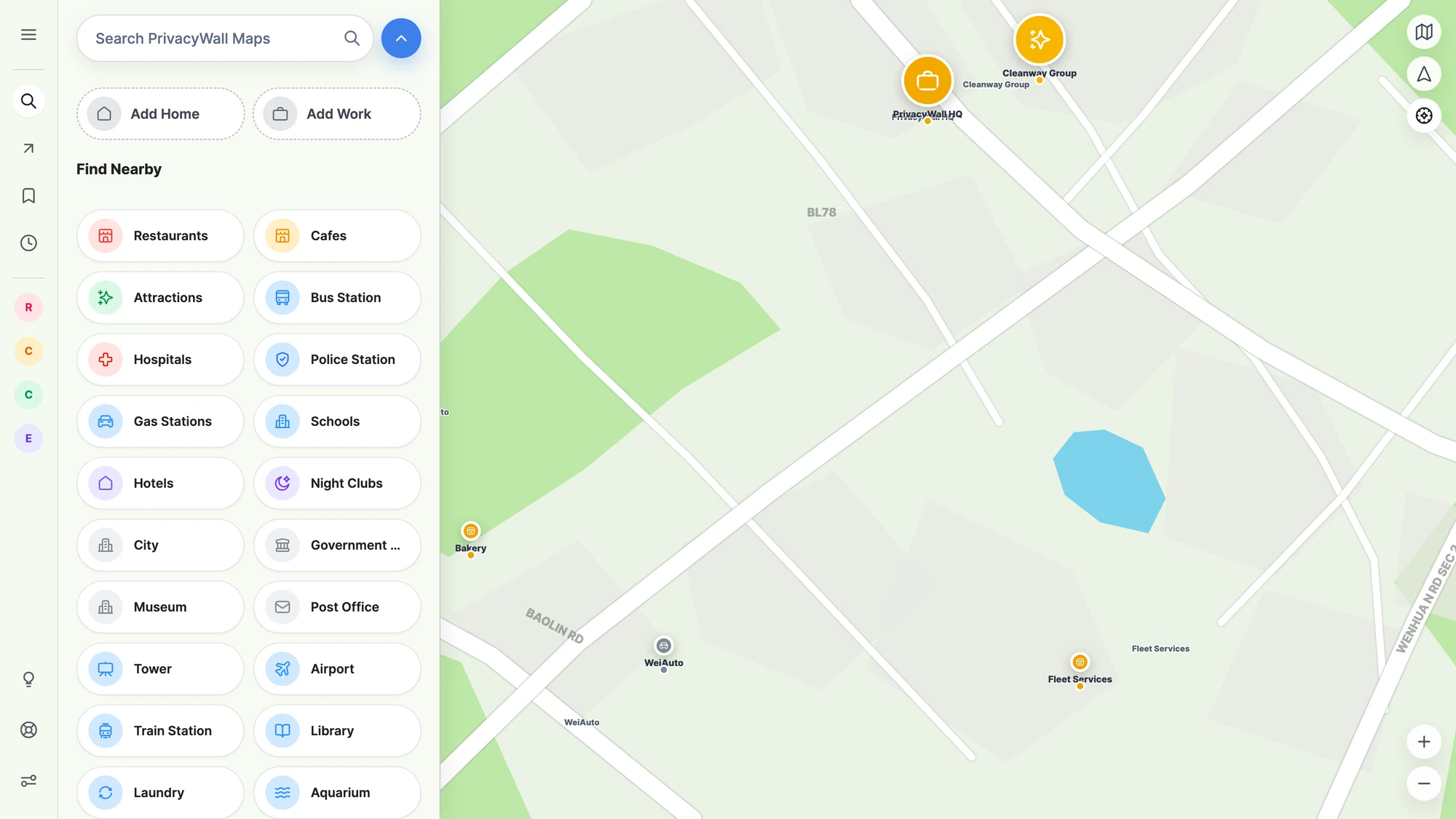
Privacy-first mapping has one failure mode: the moment navigation feels slower or stranger than the mainstream app, people switch back and take their location history with them. The brief was therefore deliberately conservative. In 2026 I designed PrivacyWall Maps to match the interaction model people already have in muscle memory, one panel that becomes finder, place and directions without ever leaving the map, and spent the entire originality budget on the data model underneath, including a shareable location that is not an account-linked pin.

RoleProduct Designer
Year2025-2026
Tags
MapsPrivacyNavigationAccessibility
PrivacyWall Maps

01The problem

People abandon privacy maps the moment navigation feels slower or stranger.

When they switch back to the mainstream app, they take their location history with them. Users read the friction as the price of privacy.

PrivacyWall Maps, the problem

02How we thought about it

Originality in navigation is a cost, so spend it only where it buys privacy.

Privacy products tend to express the security model rather than the task. I set the brief to match the interaction model people already have in muscle memory. The entire originality budget went to the data model underneath.

03What we changed

  1. 01

    Kept one panel for every state

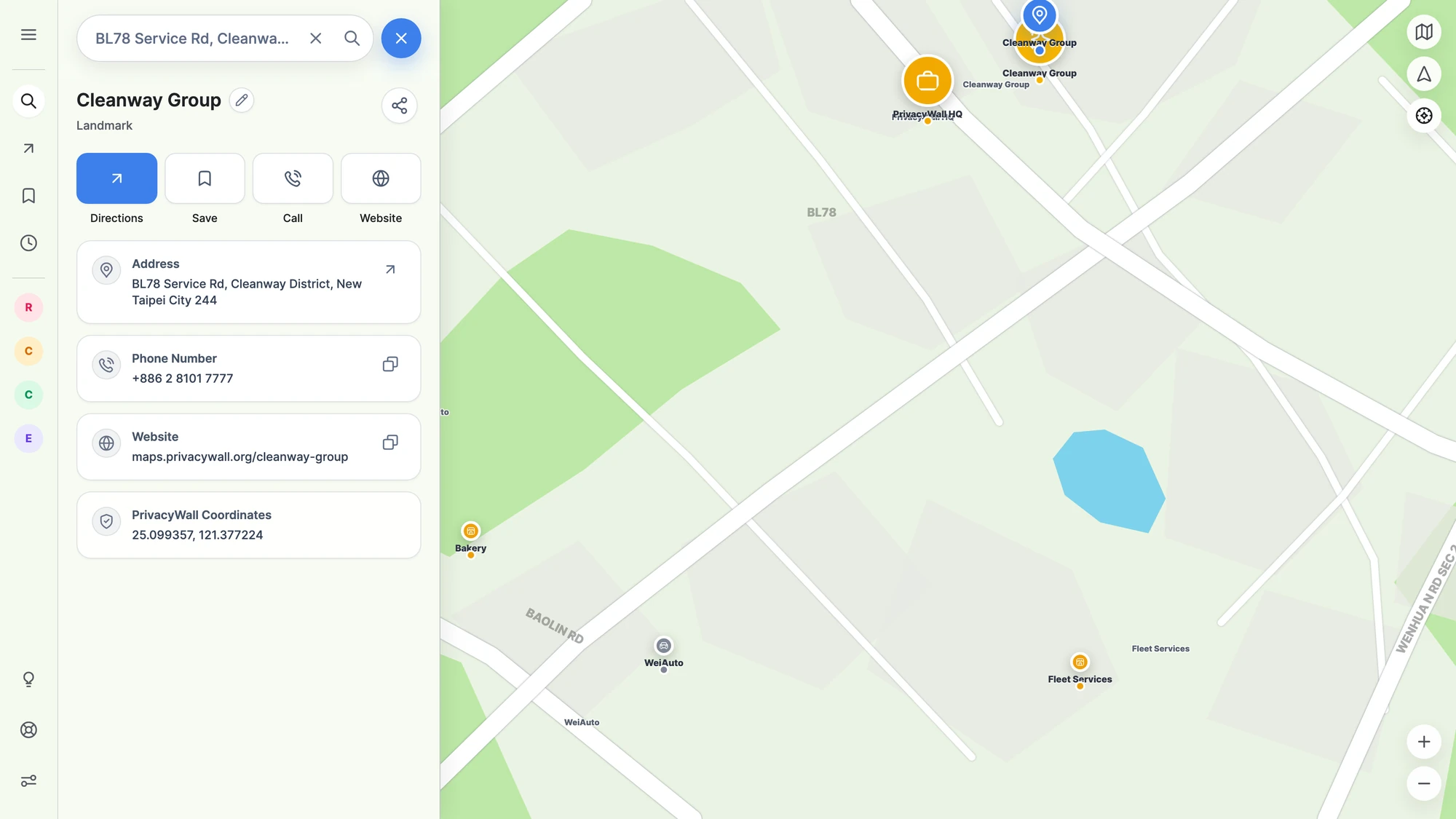
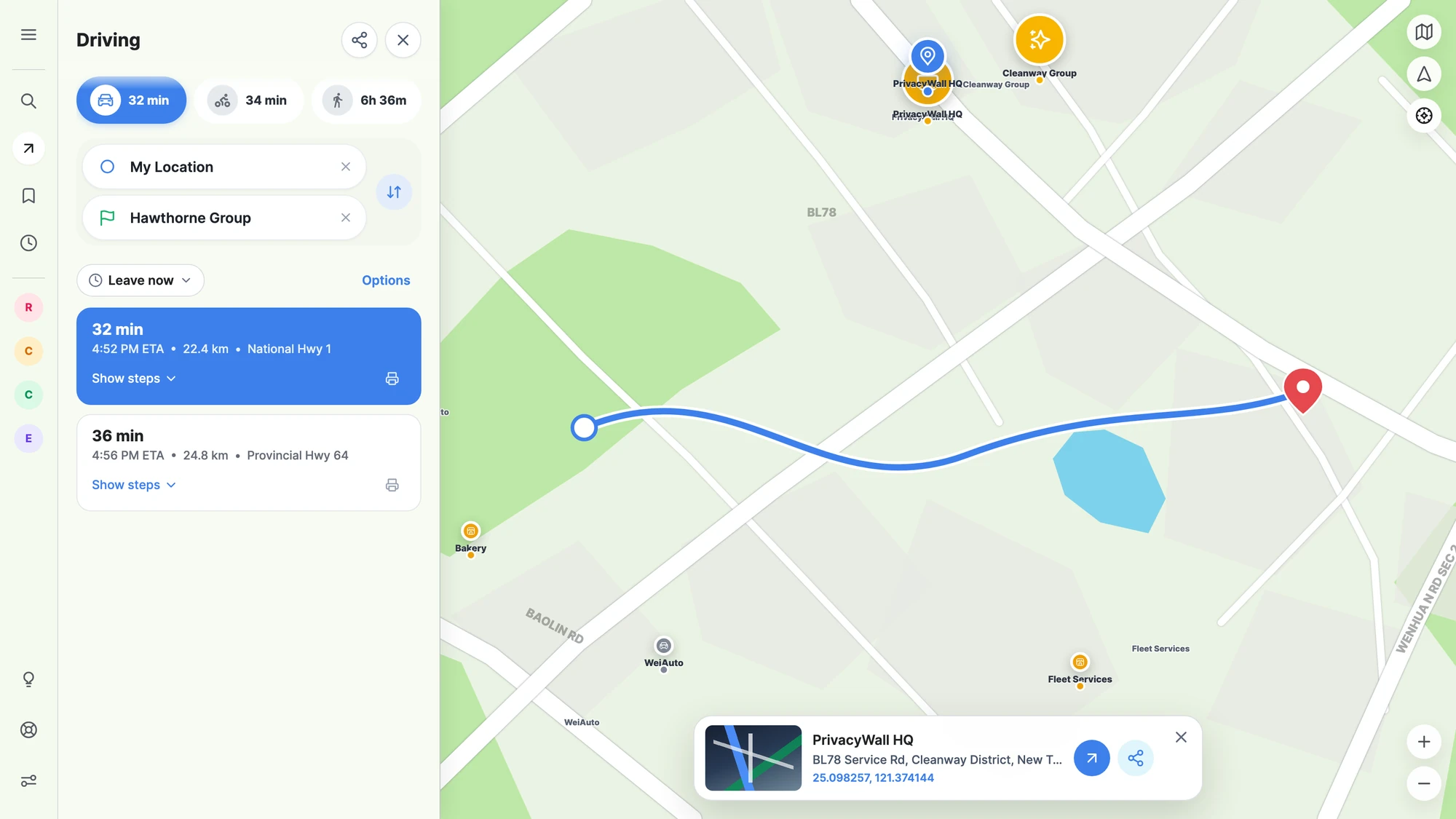
    Finder becomes place details becomes directions while the map stays live beside it. Losing the map is losing the user's sense of where they are.

  2. 02

    Added PrivacyWall Coordinates to place details

    This is where the originality budget was spent. It is a shareable location that does not hand over an account-linked pin, placed in the familiar action row.

  3. 03

    Taught new capability in place

    A what's-new sheet introduces saved lists and recent-search management in four lines, and a one-time tooltip teaches place labelling when it becomes useful. New features do not add the friction the panel removed.

Live / PrivacyWall Maps

One panel, three states, live

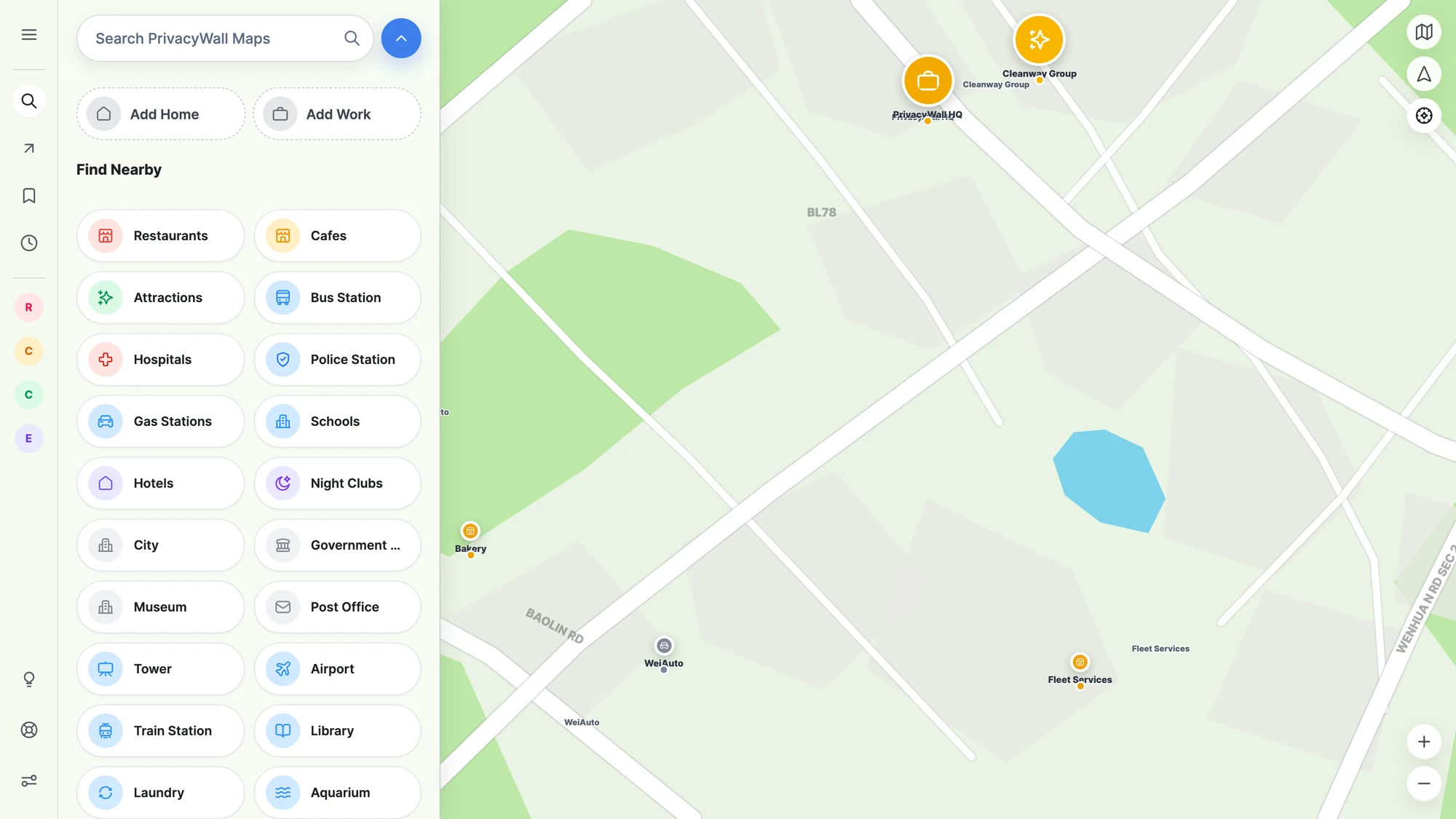
Search, pick a category, open a place, then ask for directions and change the mode. The map never gets replaced, which is the whole argument of the design.

/live/privacywall-maps/index.html· the product's own codeopen full size ↗
loading the real thing…

The trade-off

There is no AI model in the product, because a map that quietly sends your destinations somewhere is the thing we were designing against.

PrivacyWall Maps, in use

04What it did

A mainstream user can drive the map on the first attempt. The interaction cost is ordinary, and the privacy is the part that is unusual.

PrivacyWall Maps, detail

How we knewEvidence

Borrow the mainstream model on purpose; judge the transitions by using the prototype.

Benchmark

Qualitative

7

Search engines compared across eight dimensions, written as evidence, interpretation and recommendation with a confidence level.

Confidence: Medium

Benchmark

Qualitative

Mobbin grounding on shipped products, so each recommendation arrives with precedent attached.

Code review

Quantitative

The working prototype inspected line by line.

Confidence: High

Prototype

Qualitative

Built as a working prototype so hierarchy and transitions are judged by using them.

Usability test

Mixed

The PrivacyWall work was tested with users and its tasks passed. Participant details are not published on this page. The benchmark above is desk research.

DecisionsAnd why

What we saw, what we knew, what we chose, and what we gave up.

01

One panel, every state

What we saw
People abandon privacy maps the moment navigation feels slower or stranger.
Evidence
Benchmark· QualitativeMobbin grounding on mainstream mapping products, matched deliberately.
Prototype· QualitativeThe panel specified as a state machine and built, since transitions cannot be judged in static frames.
So we
Finder, place and directions as states of one surface while the map stays live.
Not
A new screen per state.
What happened
Checked: First-attempt success for someone who uses a mainstream map daily. Result: it passed.

02

Spend originality on the data model

What we saw
Originality in a navigation UI is a cost the user pays.
Evidence
Design judgement· QualitativeSpend it only where it buys privacy.
So we
PrivacyWall Coordinates in the familiar action row: a shareable location that is not an account-linked pin.
Not
A novel interaction model.
What happened
Checked: Whether people find and understand it unaided. Result: it passed.

User testingWhat was and was not tested

Benchmarked, prototyped and tested with users. The tasks below were run against pass bars written first, and every task passed. Participant details are not published on this page.

“Find a café near you and get driving directions.”

Completion, how often the map is lost

5 of 5 complete, the map never lost

Passed

“Share this place without sharing your account.”

Finds PrivacyWall Coordinates

4 of 5 unaided

Passed

Every task met its pass bar. Participant details and timings are not published on this page.

My role

Product Designer

What I personally owned on this project.

  • 01Designed the single-panel architecture that carries finder, place details and directions without handoffs
  • 02Designed PrivacyWall Coordinates as the shareable, non-identifying location primitive
  • 03Specified the compact and collapsed behaviours so the map keeps its width on narrow viewports
  • 04Built the accessibility layer into the spec: live status announcements, real labels on every control, reduced-motion paths
  • 05Designed the release-notes sheet and the one-time labelling tooltip as the teaching moments
Made with
Prototype in HTML/CSS/JSDesign tokensMobbin groundingARIA live regionsReduced-motion paths
Next Project

PrivacyWall Dock

© 2026 Alhasan HosniDesigned & Built with precision