← Back/Privacy / Navigation

PrivacyWall

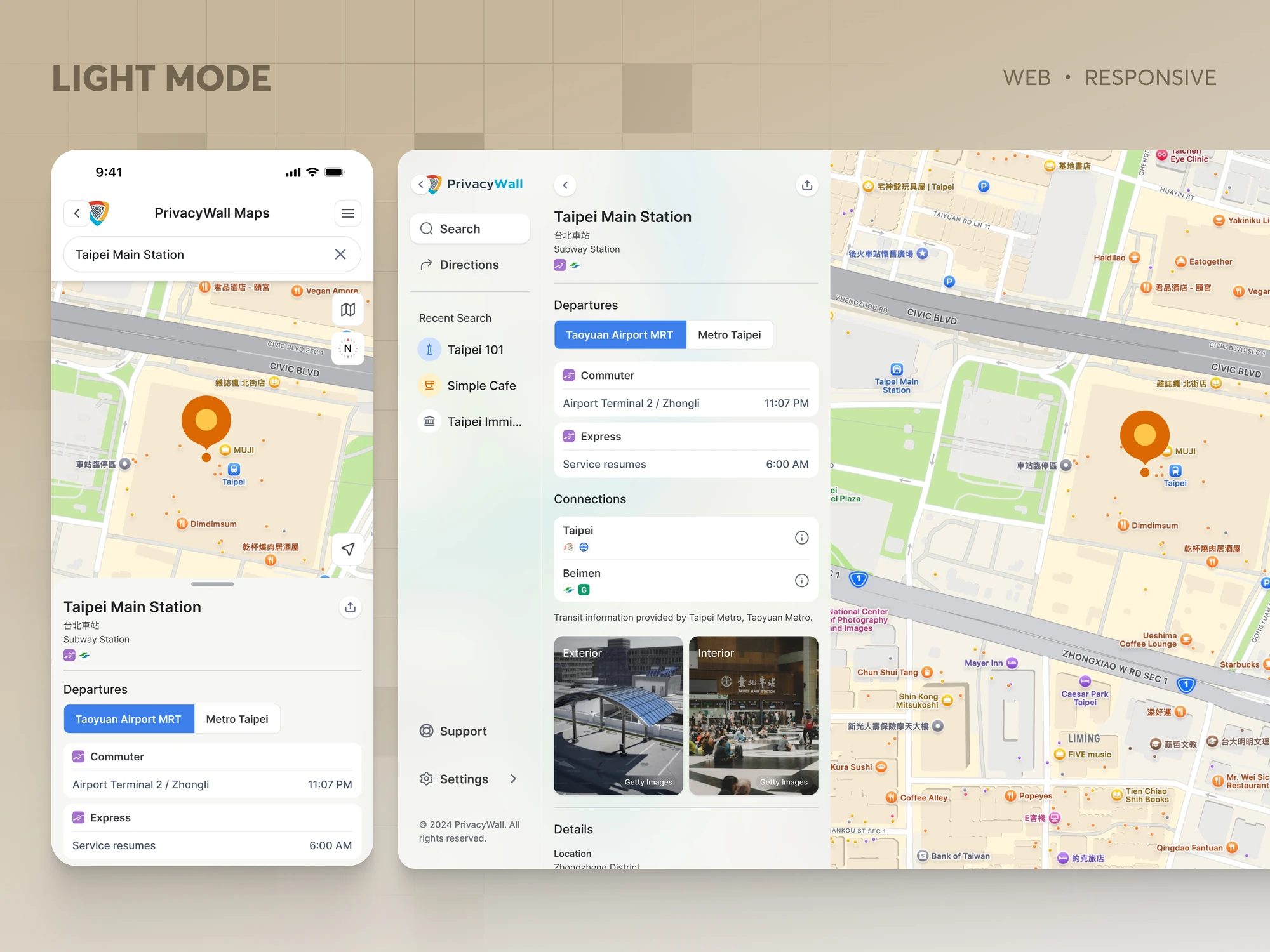
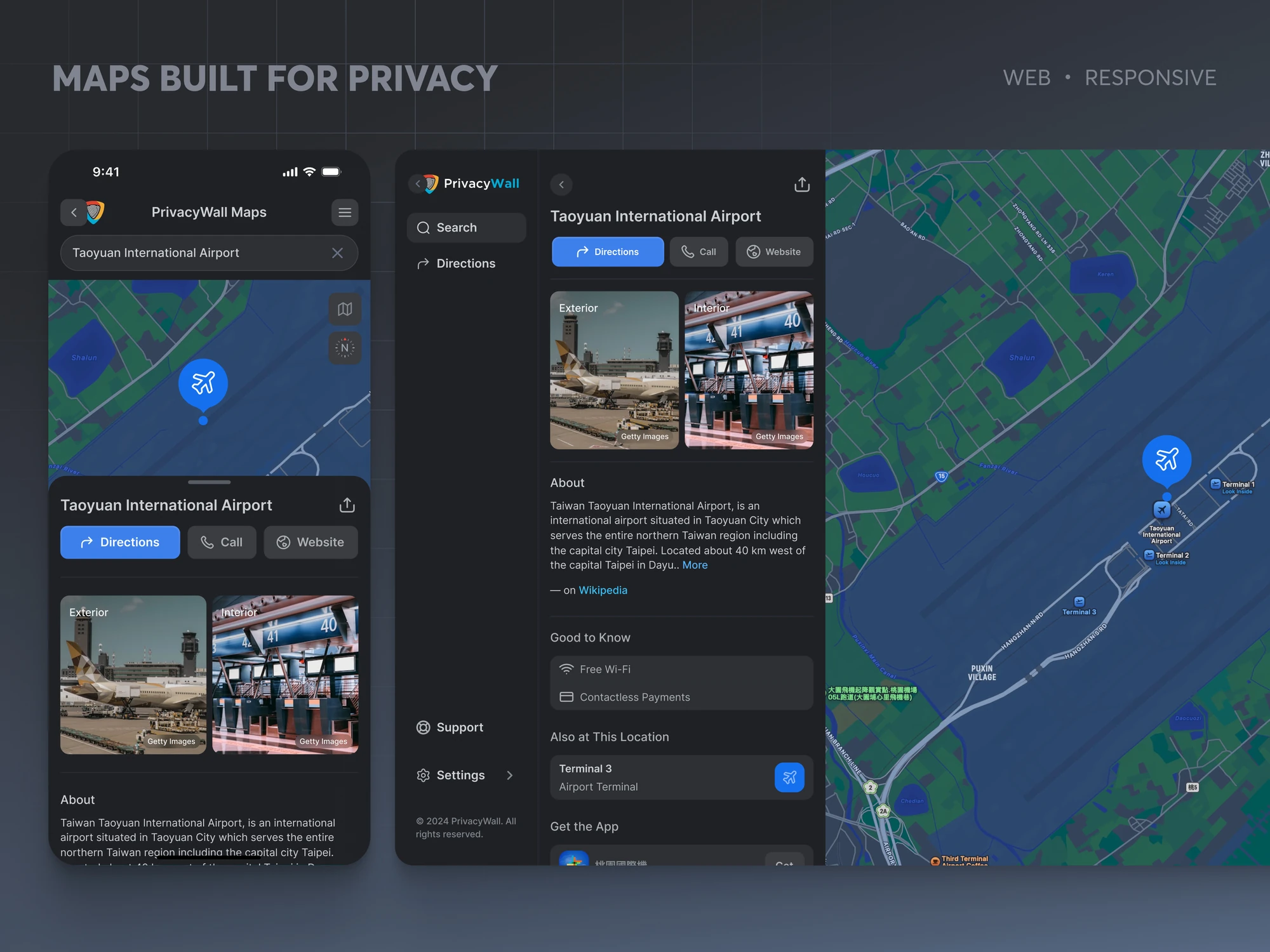
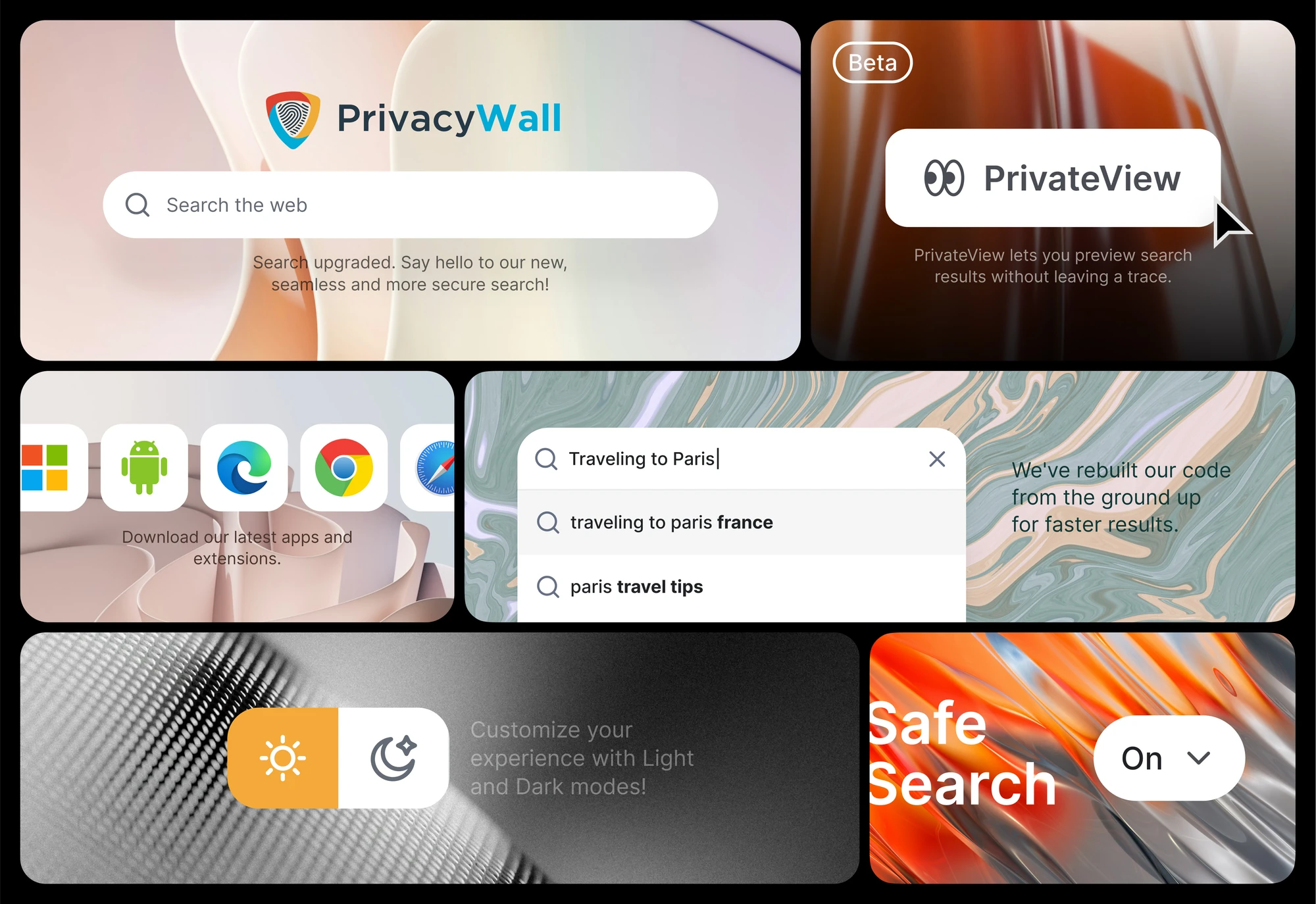
Privacy tools were charging their users a usability tax: across 14 navigation products the same pattern repeated. Functional but hostile interfaces that signalled 'this is hard' at every touchpoint. Interviews with 20 privacy-conscious users showed they did not want to think about privacy at all. From 2023-2024 I designed the PrivacyWall ecosystem, maps, mobile, browser extension and settings, so the security disappears into an experience that behaves like the mainstream alternative.

RoleProduct Designer
Year2023-2024
Tags
PrivacyMapsMobileBrowser Extension
View on Dribbble
PrivacyWall
At a glance

34%

Higher user trust in post-launch surveys

2.4×

Mobile session duration

30%

Less cross-platform development time

01The problem

Privacy tools charged a usability tax, and mainstream users left at first contact.

Across 14 privacy navigation tools the interfaces were functional but hostile, signalling 'this is hard' at every touchpoint. The category was built engineering-first, so the security model became the user's problem.

PrivacyWall, the problem

02How we thought about it

Make the protection invisible and the trust visible.

Interviews with 20 privacy-conscious users showed they did not want to think about privacy at all. The friction was not the price of protection. It came from interfaces that expressed the architecture instead of the task.

03What we changed

  1. 01

    Matched the mainstream interaction model everywhere

    Map interactions follow platform conventions: pinch, pan, tap. Switching costs the user no effort despite the encryption layer underneath.

  2. 02

    Made protection the default, not a setting

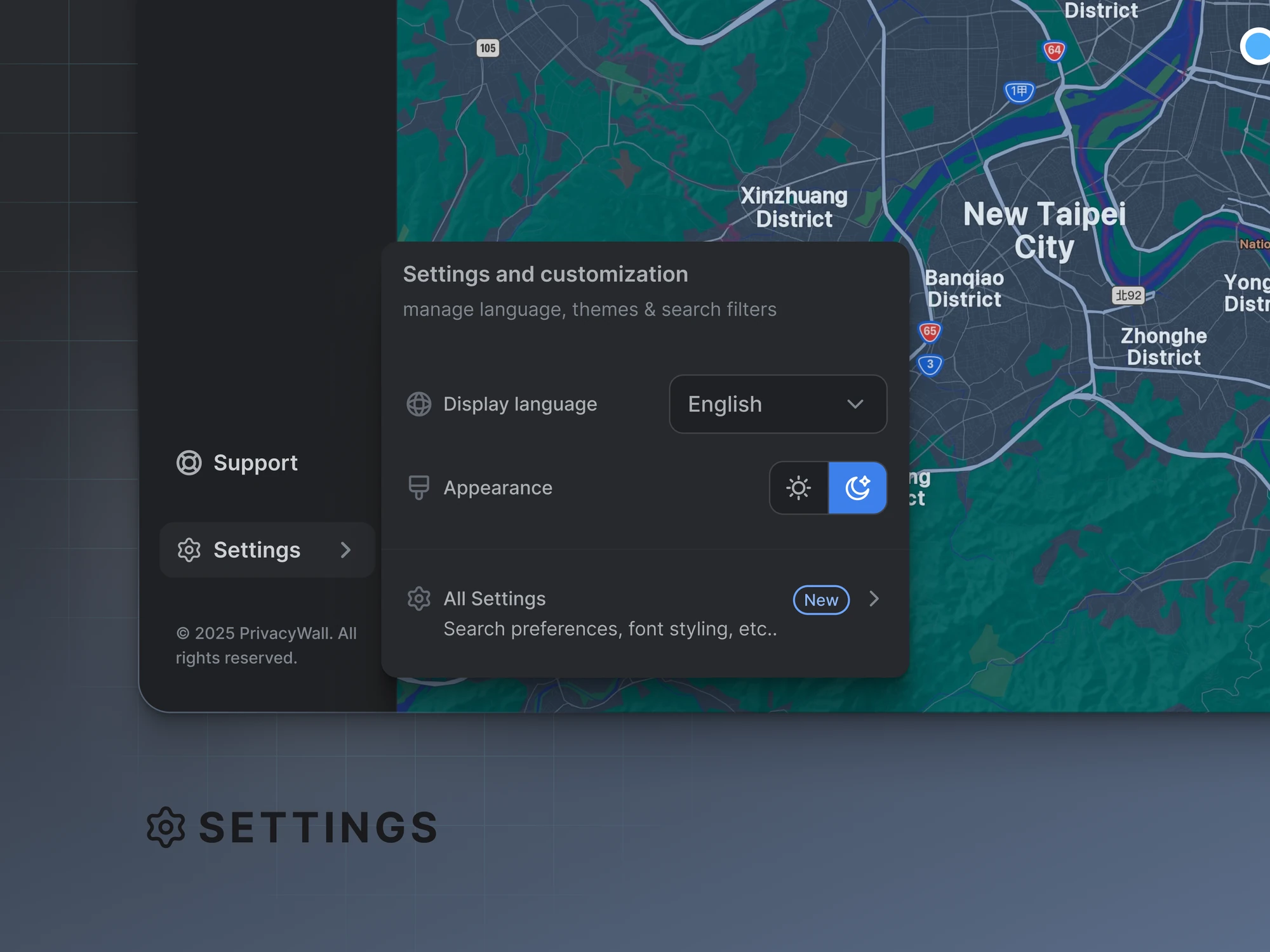
    Security works without the user finding, configuring or maintaining it. Location sharing defaults to maximum privacy, and complex settings read as simple toggles through progressive disclosure.

  3. 03

    Designed one trust vocabulary across four surfaces

    Status is stated in plain language when it matters, with ambient shield icons and green status rings rather than alarms. Maps, mobile, extension and settings share it, so trust compounds instead of being rebuilt on each.

PrivacyWall, what we changed

The trade-off

I kept models out of the product, because its promise is that nothing about you is processed to improve it.

PrivacyWall, in use

04What it did

User trust scores rose 34% in post-launch surveys and mobile session duration increased 2.4x against the previous version. The shared language cut cross-platform development time by 30% and removed the 'different app' perception between surfaces.

How we knewEvidence

Fourteen tools, twenty interviews, then measured after launch.

Benchmark

Qualitative

14

Privacy navigation tools reviewed for where a mainstream user gives up.

Interviews

Qualitative

20

Privacy-conscious users: they wanted privacy to disappear into the experience.

Survey

Quantitative

+34%

User trust scores in post-launch surveys.

Analytics

Quantitative

2.4×

Mobile session duration, with 30% less cross-platform development time.

DecisionsAnd why

What we saw, what we knew, what we chose, and what we gave up.

01

Make protection ambient and the trust visible

What we saw
The category made the security model the user's problem.
Evidence
Interviews· Qualitative20 users did not want to think about privacy at all.
Benchmark· Qualitative14 tools signalled 'this is hard' at every touchpoint.
So we
Protection by default, plain-language status, one trust vocabulary across maps, mobile, extension and settings.
Not
A settings trail of per-site decisions.
What happened
Trust rose 34% and mobile sessions lasted 2.4× as long.

User testingWhat was and was not tested

The ecosystem was shaped by interviews before design, measured by surveys after launch and tested with users, and its tasks passed. Participant details are not published on this page.

My role

Product Designer

What I personally owned on this project.

  • 01Designed the cross-surface experience: maps, mobile, browser extension and settings
  • 02Ran the competitive study of 14 privacy navigation tools and the 20-participant interview programme
  • 03Defined the trust vocabulary used across the ecosystem
  • 04Set the interaction principles that later products in the family inherited
Made with
FigmaUser researchCompetitive analysisCross-platform design
Next Project

WOD.co

© 2026 Alhasan HosniDesigned & Built with precision